If you, or someone you love, might be admitted to hospital soon — even if it’s just a “maybe” — this is the single most important thing to read before that happens.
💡 A Note Before You Read: Navigating hospital discharge rules can feel completely overwhelming—especially when you are already physically and emotionally exhausted. You do not have to wait for a crisis or a forced discharge order to ask for help. Reach out to Patient Pathways long before your loved one is told they are going home. Engaging an advocate early gives you the strategy, time, and support needed to protect your loved one, before the hospital discharge clock ever starts ticking.
British Columbia’s hospitals are still catching their breath.

BC's hospital staff are still recovering from weeks of strain — which is exactly why families need to plan ahead.
The province has just come through the longest nurses' strike in its history — three weeks of job action across major hospitals before a mediated deal ended it on July 24, 2026. Whatever your view of the dispute, the practical reality is the same: units are working through a backlog, staff are stretched thin, and the pressure to clear beds quickly hasn't gone away — it's intensified.
This makes everything I’m about to share more urgent, not less.
Discharge is the most complex and dangerous transition of care in the entire medical system. Assuming ‘no news is good news’ on a hospital ward is a recipe for disaster. In discharge planning, no news is never good news—you must expect a sudden discharge call at any time. True discharge planning must begin on Day 1 of admission.
Going home—especially after an unplanned hospital admission—should be a time of relief. However, without proactive planning, leaving the hospital can quickly become a medical crisis. While home is usually the best environment for long-term recovery, a patient should only be discharged when the home environment is properly equipped, safe, and supported.
When it comes to hospital discharge, silence from the medical team is never reassuring. Assume that discharge will happen much sooner than you expect, and often before you or your family feel ready. To protect your loved one, you must be proactive, plan for the worst-case scenario, and follow up relentlessly.
Why Discharge Might Happen Before You’re Ready
Many families assume attending physicians personally dictate when a patient leaves. In reality, once a patient is deemed “medically stable”—meaning acute life threats are managed—administrative bed management takes over. With hospitals across our major cities and Vancouver Island now working through weeks of deferred care, that bed-management pressure is higher than it has been in years.
The “Home First” Policy Trap: BC health authorities operate under a “Home First” mandate, requiring care teams to attempt sending patients home with minimal supports before considering Assisted Living or Long-Term Care (LTC).
The Monday Morning Rush: Monday mornings are peak discharge windows. Weekend Emergency Department admissions and scheduled Monday surgeries create immense administrative pressure to clear ward beds by noon.
The “Friday Afternoon Special”: On Friday afternoons, hospitals attempt to clear beds before weekend staffing cuts. Discharging a complex patient at 4:00 PM on a Friday is notoriously dangerous because community health offices, equipment suppliers, and pharmacies are often closed over the weekend.
The “First Available Bed” Trap: If you secure Alternate Level of Care (ALC) status for Long-Term Care, health authorities enforce a policy requiring you to accept the first appropriate bed available in the region, even if it is far from home. Refusing can trigger daily non-benefiting patient fees.
Knowing Your Limits & the Limits of the BC Systems
A major point of breakdown after hospital exit is a misunderstanding of what public support actually provides.
Public Support is Task-Oriented: Subsidized home support typically covers brief 15- to 45-minute visits for basic personal care (such as a shower or medication check). It does not provide round-the-clock supervision, meal prep, or continuous nursing.
Caregiver Incapacity: If an aging or frail spouse is expected to perform heavy two-person transfers or manage round-the-clock incontinence care, the discharge plan is clinically invalid.
Legal Protections: Under BC’s Adult Guardianship Act, health authorities have a legal duty to protect vulnerable adults. Forcing a complex patient into the care of an incapacitated spouse breaches that duty of care.
Home Prep

An OT home visit before discharge can catch what a hospital room never will.
Before accepting a discharge date, work with the hospital Occupational Therapist (OT) to audit the home:
Equipment Sourcing: Utilize the Canadian Red Cross Health Equipment Loan Program (HELP) for short-term mobility and bathroom aids upon professional referral.
Physical Home Clearances: Verify doorway widths for wheelchairs, evaluate stair navigation, and ensure there is physical space for a hospital bed or lift.
Key Lockboxes: Install an inexpensive mechanical key lockbox on the front door so community support workers can enter safely without forcing a frail patient to walk to the door.
Transport Costs: Hospitals do not fund or arrange patient transport home. If specialized wheelchair or stretcher transport (Non-Emergency Medical Transportation) is required, families must book and pay for this out-of-pocket days in advance.
The Critical Exit-Checklist
A 2023 JAMA Internal Medicine study found that patient education at discharge often falls short — and Toronto's University Health Network reached the same conclusion from the other direction, redesigning discharge instructions in plain language after finding patients simply couldn't act on clinical jargon written for a hospital chart. The pattern holds everywhere: care plans fail when instructions are written for the ward, not for home.
Before stepping off the ward, conduct a strict 5-step Exit Audit:
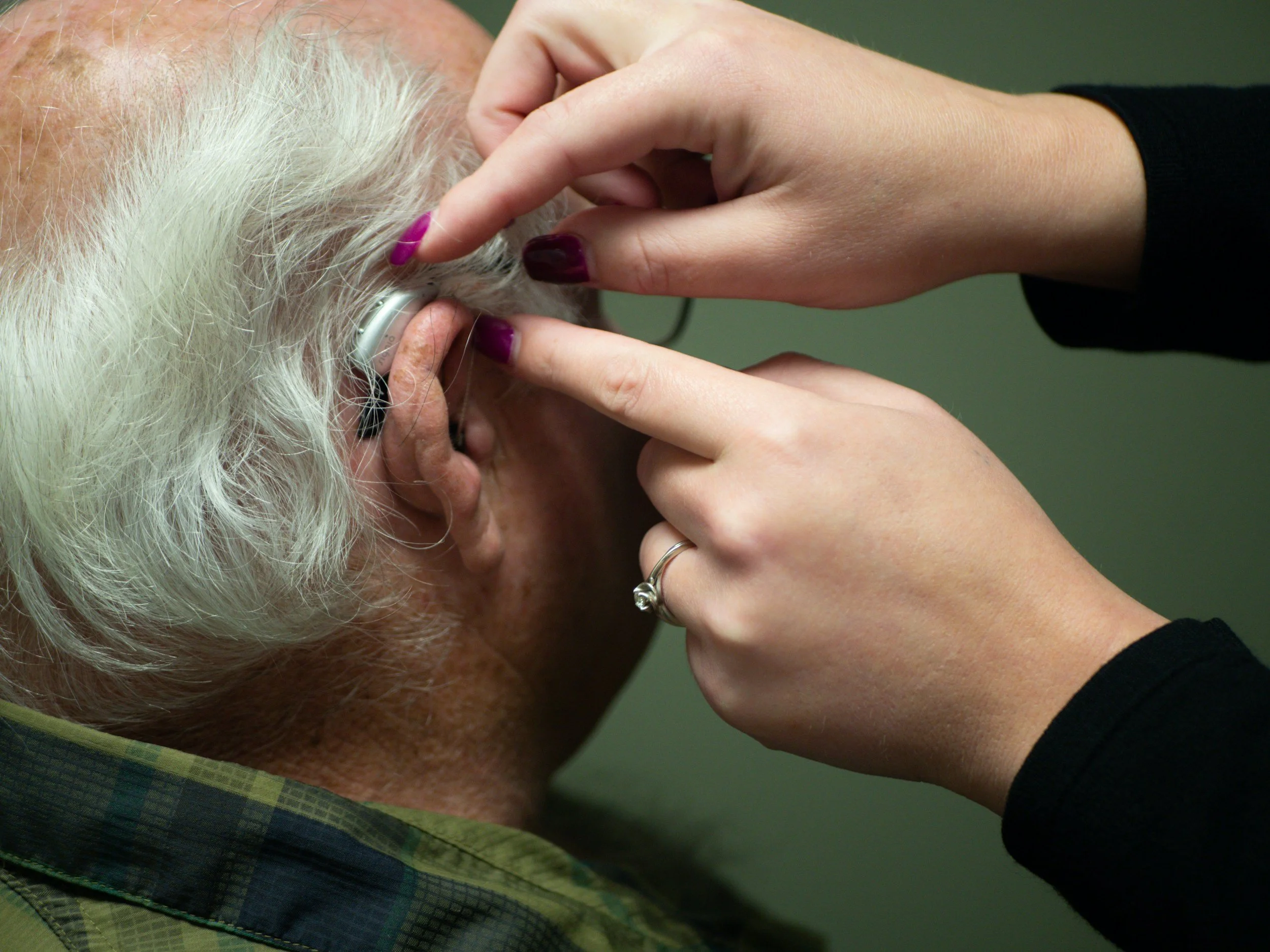
A missing hearing aid at discharge is a leading cause of post-hospital falls and confusion — always do the check before you leave the ward.
Obtain a Printed Discharge Summary: Health authority electronic records across BC are fragmented and often do not communicate. Always carry a physical, printed copy home for your family doctor or emergency care.
Perform the “Medicine Cabinet Purge”: Hospital admissions frequently alter, pause, or add medications. Upon arriving home, immediately isolate or dispose of old medication bottles that were stopped or modified so the patient does not accidentally double-dose.
Identify a “Single Point of Contact”: Ask the team directly: “If a medication question or symptom change arises on Saturday, what exact phone number do we call before our follow-up doctor appointment two weeks from now?”
It's also worth having our I.C.E. Form filled out ahead of time, so that number and every other emergency detail is in one place your family can find fast.
Confirm Written “Red Flag” Symptoms: Ensure you have explicit written guidelines detailing which recovery symptoms are expected, which require a call to 811 or your GP, and which demand an immediate return to the ER.
Conduct a Sensory Aid Audit: Physically inspect the patient and bedside locker before leaving to ensure eyeglasses, hearing aids (with batteries), dentures, and custom footwear are retrieved. Misplacing these items is a leading cause of post-discharge delirium and falls.
The First 72 Hours: Navigating the Care Vacuum
In the immediate post-discharge window, the Care Partner is not just assisting the transition—they ARE the transition.
Because public home care assessments can take days or weeks to deploy after hospital exit — and that queue is longer than usual right now — families must bridge the initial care gap. Follow-up appointments scheduled two weeks away assume a level of physical stability that the first 72 hours do not guarantee.
If a home discharge was forced prematurely and immediately collapses—or if a promised supports fails to arrive—do not attempt to manage an unsafe situation alone. Transport the patient back to the Hospital Emergency Department immediately. Re-entering through the ER documents the failure of the care plan, resets the clinical assessment, and forces the health authority to re-evaluate the patient for direct long-term placement.
Frequently Asked Questions
What is ALC status in BC?
Alternate Level of Care (ALC) status is a designation health authorities use once a patient no longer needs acute hospital care but still needs ongoing support, such as placement in Long-Term Care. Once ALC status is assigned, BC policy requires accepting the first appropriate bed offered in your health region — even if it isn't your first choice — or risk daily non-benefiting patient fees.
Can I refuse a hospital discharge in BC?
You can raise concerns and ask for more time, but hospitals can discharge a patient once they're deemed medically stable, whether or not home supports are fully in place. The strongest protection is proactive planning before a discharge date is set — and involving a patient advocate early if the plan looks unsafe.
What is BC's "Home First" policy?
"Home First" requires BC health authorities to attempt sending patients home with minimal community supports before considering Assisted Living or Long-Term Care. It reduces hospital bed pressure, but it also means many families are sent home with far less support than they expect.
Need Organizational Support?
Navigating hospital discharge rules while exhausted is a daunting challenge — and it’s harder still with the whole system working through a strike backlog. PatientPathways.ca provides expert healthcare advocacy for families in Vancouver, Vancouver Island, and across BC, helping you challenge unsafe discharges, secure Alternate Level of Care (ALC) status, and protect your loved ones.